The Quick and Dirty Guide
to Buying a Lab Grown Diamond
DataOfDiamonds is based on my research on what to look for in buying a lab grown diamond. It tries to educate on the basic principles that affect the price of a diamond and help you to develop an understanding of trade-offs and value. With lab grown diamonds, you can get a stunning 2-3 carat stone for a fraction of what a natural diamond would cost — and pair it with a truly show-stopping setting. Also, feel free to skip ahead to start at the end…
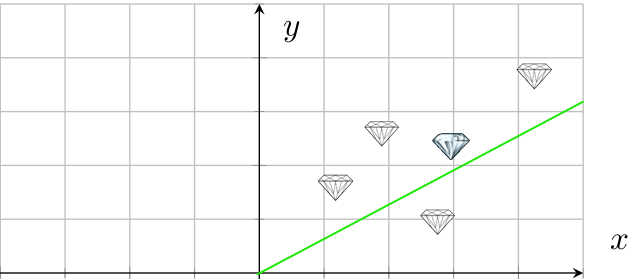
Basic math, yo
Why Lab Grown Diamonds?
Lab grown diamonds are chemically, physically, and optically identical to mined diamonds. The only difference is their origin — a lab instead of the earth. Here's why they're the move:
Price - Lab grown diamonds typically cost 60-80% less than comparable natural diamonds. That means you can afford a 2-3 carat stone for what you'd spend on a 1 carat natural. The savings are massive.
Quality - Because they're grown in controlled environments, lab diamonds tend to have fewer inclusions and better color consistency. You're getting a cleaner stone more often.
Ethics - No mining, no conflict concerns. If that matters to you (and it should), lab grown is the clear choice.
Spend on the setting - Since you're saving so much on the stone, you can invest in an incredible, premium setting. A $3,000-$6,000 setting with a gorgeous lab grown diamond will look far more impressive than a tiny natural stone in a basic prong setting.
Browse Lab Grown Diamonds at Blue Nile
General Tips
Here are the top recommendations:
It might seem obvious - but if you're shopping around online, use a private browser window (google that if you need to) AND a VPN. Even with a private tab, engagement ring ads can easily show up on your home network devices which share the same IP. Get a VPN like Nord (Start with this step)
Buy the diamond loose and have it set in a ring separately.
Call some local jewelers or just stop in and see what kind of settings they have available. See what they charge for setting a stone. Seeing a setting in person can make a huge difference. Obviously, you can get the ring online as well, and it may be a better option — depending on the quality of your local jewelers.
Check out Gabriel and Co for some examples of quality settings. Look around online, find a company that makes engagement ring settings and then look up to see if they have a retailer in your area. You'll get to see the ring and they can easily resize for you later if need be! Plus, usually they will clean and polish it once a year for free!
Don't go for the highest color and clarity rated stones; instead look in the less expensive tiers for "eye clean" stones. This is the focus of our guide.
Go big on the setting. Since lab grown diamonds save you so much money, consider investing in a premium setting with intricate detail work, pavé bands, halo designs, or vintage-inspired metalwork. A setting in the $3,000-$6,000 range paired with a 2-3 carat lab grown diamond will be absolutely stunning. Browse premium settings at Blue Nile
You should never go into serious debt for a ring. That just doesn't make sense, given that money problems are the main stress factor for relationships. The beauty of lab grown is that you can get a jaw-dropping ring without breaking the bank.
Terms to know
Here are the terms you should familiarize yourself with:
Lab Grown / Lab Created - A diamond that was grown in a laboratory using either HPHT (High Pressure High Temperature) or CVD (Chemical Vapor Deposition) processes. They are real diamonds in every way — same carbon crystal structure, same hardness, same sparkle.
Inclusions - Inclusions is the name for any small flaws found inside the diamond. It's usually little specs of carbon or sometimes different minerals. There is a whole section below on Inclusions, as it's important to understand how they fit into diamond buying.
Eye-clean - A diamond that is "eye clean" is one that may have some flaws, but that they are positioned in such a way that they aren't noticeable generally or at all.
This means the diamond will be technically rated as a lower clarity grade, which is also a large factor in how diamonds are bought and priced. Taking advantage of this is one of my main recommended buying strategies.Some diamond rings that have already been set in a placement may be hiding inclusions under the prongs of the setting. See, we're already getting our money's worth of this vocabulary.
Stone Cuts
This guide focuses on the two most popular cuts, accounting for 89% of diamonds sold.
1) Round Brilliant Cut - A round cut has been the main style of diamond shape for hundreds of years. Maximizes brilliance and fire in higher quality stones. In a 2-3 carat lab grown, a round brilliant is absolutely breathtaking.
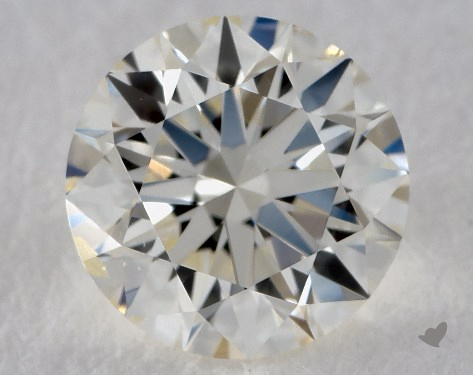
Browse Round Lab Grown Diamonds at Blue Nile
2) Princess Cut - Growing in popularity due to their square main angle and exceptional colors from side views, as well as being less expensive carat-to-carat vs a round brilliant.
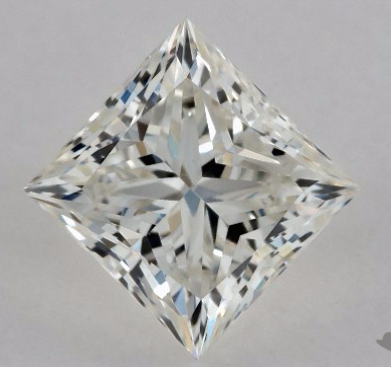
Browse Princess Cut Lab Grown Diamonds at Blue Nile
The princess cut is also more economical from a diamond cutter's perspective, as you can usually get two cut stones from one raw diamond, due to its pyramid shape and square lines. Prices are lower than Round Brilliant due to that.
The rest of the diamond cuts are more specialized. You can read more about them in the Addendum section
4 Cs - Color and Clarity vs Size and Shine
Much the same way that the difference in sun blocking power between SPF30 and SPF50 sunblock is 1%, there is a huge "diminishing returns" aspect to some diamond stats.
Diminishing returns: Clarity and Color
These are two of the Cs you can slide on, unless you want to send your diamond to the Best in Show awards.
First a quick note on these ratings. Color is a scale from D (whitest, highest) that flows through M (yellow) all the way down into the darkest shades of brown. Clarity is a measure of inclusions in the diamond which goes from Flawless to Included, based on how visible the specs are inside the diamond at varying degrees of magnification.
They are also the biggest factors (beside carat) in the price of a stone and the most vulnerable to the law of diminishing returns. For example, the price between a D-color diamond and an F (same color group) can be more than 1/4.
Clarity has similar price differentials.
The thing is, in blind tests, most people wouldn't be able to tell the difference from a D stone to a J stone, two color groups down.
Clarity is the same - an Internally Flawless diamond vs. a VS2 (Very Slightly Included 2) isn't noticeable without 10-20x zoom.
Takeaway: With lab grown diamonds, you're already saving a huge amount. But you can stretch your budget even further by not maxing out color and clarity. Focus on cut and carat — get that 2-3 carat stone with an excellent cut, and put the rest of your budget into a premium ring setting.
Color Grades
Diamond Color Chart:
1st Colorless: D,E,F
2nd Near Colorless: G,H,I,J
3rd Slight yellowish: K,L,M
4th Very light yellow: N,O,P,Q,R,
5th Light Yellow: S,T,U,V,W,X,Y,Z
Note: Lab grown diamonds tend to have very consistent color. Compare stones from the same color group online and you'll notice that even two diamonds in the same group can vary — one might look noticeably more yellow than the other.
IMHO, it's important that you take some time and look for a stone that looks whiter/cleaner to you (the eye clean idea here). Compare D-F stones to some G-I stones and see if you can find some in the less expensive tiers that still look clean. With lab grown, you'll find more consistent quality in the near-colorless range.
Clarity Grades
The measurements are as follows: Flawless - FL - No blemishes, at 10x magnification by an expert, inside or on surface. Internally Flawless - IFL - * just minor surface marks
Very Very Slightly Included- VVS1 & VVS2
Very, Very Slightly Included category (VVS) diamonds have minute inclusions that are difficult for a skilled grader to see under 10x magnification
Very Slightly Included - VS1, VS2
VS has visible inclusions that a recently-trained grader can see under 10x magnification
Slightly Included - SI1, SI2
Noticeable inclusions under 10x by a trained grader
Included - i1, i2,i3
Some inclusions that can be seen the naked eye
Another note on Inclusions
Unless you're carrying a jeweler's loupe around, you'll never notice the difference between an IFL and a VS2. And the price difference is huge.
However, diamonds in the VS1,VS2,SI1,SI2 will have some inclusion and, depending on the color and location of these inclusions, could end up with a diamond that has lots of black shadows in it. Sometimes this is referred to as the "fun-house mirror" effect, as one large inclusion could be bounced around eight times back to the eye. Again, most inclusions won't be very noticeable unless you're using a 10x-20x zoom.
The best way to avoid that is to compare a lot of stones using a good diamond viewer and settle on one that is eye clean to you in the clarity grade you're buying. There will be a lot of stones in the VS2 & SI1 brackets that still look great. Compare lab grown stones on Blue Nile
Size and Shine - Focusing on Carat and Cut
With lab grown diamonds, you can comfortably shop in the 2-3 carat range for what you'd pay for a 1 carat natural diamond. This is one of the biggest advantages of going lab grown — real size without the sticker shock.
A few notes on carat size in this range:
1) A 2-3 carat diamond is a statement piece. It will look incredible in a well-designed setting. At this size, cut quality becomes even more important because any imperfections in how light is handled will be more visible.
2) The old trick of buying slightly under round numbers still applies. A 1.95 carat instead of 2.00, or a 2.90 instead of 3.00, can save you money with zero visible difference.
The C that Does Matter - Cut
The diamond's cut is important to how it shines and sparkles. The basics of it are as follows.
The measurements of a diamond that most affect its shape and bling-ability are Table Width and Total Depth percentages.
The "table" being the widest topmost part of the diamond allows light to enter the diamond and the Total Depth is how far it travels down and affects how it's reflected back out to the eye.
When you know the ideal ranges for these ratios for the cut of diamond you're shopping for, you can estimate to fair degree that the diamond will in fact be extra shiny.
Round Brilliant Cut: table width 53% and 64% and a depth between 58% and 64%. Rule of thumb — 60/60
Princess Cut: is a little more generous between 65% and 80%
This is a great page that explains the various codes you'll see next to diamonds while shopping in fuller detail: http://4cs.gia.edu/EN-US/diamond-clarity.htm
Choosing the Ring Setting — Go Premium
Since you're saving so much by going lab grown, this is where you should splurge. A premium setting transforms a diamond from "nice rock" into a true piece of jewelry art. Here's what to consider:
Premium setting styles to consider:
Halo settings — A ring of smaller diamonds surrounding the center stone makes it look even larger and adds incredible sparkle. With a 2-3 carat lab grown center stone, a halo is absolutely show-stopping. See halo settings at Blue Nile
Pavé bands — Small diamonds set into the band itself. Adds sparkle from every angle and gives the ring a luxurious feel.
Three-stone settings — A center stone flanked by two smaller stones. Classic, timeless, and looks incredible with larger lab grown diamonds.
Vintage / Art Deco inspired — Intricate metalwork, milgrain edges, and detailed patterns. These settings are works of art on their own and pair beautifully with a clean lab grown stone.
Cathedral settings — Arches of metal rise up to hold the diamond, giving it height and presence. Perfect for showcasing a 2+ carat stone.
Metal choices: Platinum is the premium option — durable, naturally white, and hypoallergenic. White gold is more affordable with a similar look but needs re-plating over time. Yellow gold is making a big comeback and means you can go a bit warmer on the diamond color. Rose gold offers a unique, romantic aesthetic.
Browse Blue Nile's Premium Ring Settings
Recommended Retailers - Where to Buy Online
If you are planning to buy online, here is a little review of the major online diamond retailers. There are also of course local places, where you get that friendly neighborhood experience and even a thriving market on Etsy.
-
Blue Nile (Recommended) - Blue Nile is one of the largest and longest running online diamond retailers. They have an excellent selection of lab grown diamonds and their pricing is very competitive. Their lab grown diamond collection is extensive, and they offer a wide range of premium settings — from classic solitaires to intricate designer pieces. The combination of low lab grown prices and high-end setting options makes them ideal for the "big stone, beautiful setting" strategy we recommend.
Brilliant Earth - This site focuses on ethically sourced and lab grown diamonds with a good selection of unique settings.
- WhiteFlash - Long running website that focuses on finding diamonds that have a great cut and shine.
Recommendations Summary
- Go lab grown — same diamond, fraction of the price, no ethical concerns
- Target 2-3 carats for a truly impressive center stone
- Max out on Cut over Clarity and Color
- Buy stone and setting separately
- Invest in a premium setting ($3,000-$6,000) — halo, pavé, vintage, or cathedral
- Learn what an "eye clean" stone is (hint, diamonds are tiny and specs in diamonds are even tinier)
- Make sure Table Width/Height Ratio is good
Examples
- Best Color/Cost balance for lab grown: G,H,I; Clarity: VS2, VS1; Cut: Excellent or Ideal
- Target size: 2.0 - 3.0 carats
- For Princess cut (Table width and total depth between 65% and 80%)
- Round Brilliant Cut (Table width, Total depth around 60% — Table width between 53% and 64% and depth between 58% and 64%, if you want to get technical)
Browse Lab Grown Diamonds at Blue Nile
Browse Premium Settings at Blue Nile
- Setting: Yellow Gold — Best Cut: Round Cut — Best Color/Cost balance: I-K color, Clarity: VS1-VS2, Cut: Excellent
- Setting: Platinum or White Gold — Best for colorless and near-colorless stones (D-H), pairs beautifully with halo and pavé designs
General advice would be to play around and compare a lot of lab grown stones in the 2-3 carat range against your price range and try to find the one that looks eye clean to you, while taking into account the color and clarity grade. Then put the savings into a setting that will make the ring unforgettable.
Addendum
Cuts
These ones are lower in popularity but by no means ones that should be ignored completely. There are more unique styles that might go well with a vintage or more intricate ring setting. Also more "antique" cuts like the pear shaped cut could be a better deal, if you poke around. At 2-3 carats, some of these alternative cuts really come alive.
3) Marquise Cut — A unique shape that gives the effect of a more slender finger.
4) Cushion Cut — Rounded corners and larger facets that work well with larger diamonds. An excellent choice in the 2-3 carat range.
5) Emerald Cut — Emerald cut gives a diamond more facets because of the "steps" up to the table (top level) of the stone. Very elegant and striking at larger sizes.
6) Radiant Cut — Similar to Emerald cut but with rounded "steps".
7) Pear Shaped — Combination of marquise and round cuts
8) Oval Cut — Popular in engagement rings and matches well with other jewelry. Most similar to Rounded Brilliant Cut. Currently very trendy and looks fantastic at 2+ carats.
Browse all lab grown diamond shapes at Blue Nile
We monetize with a referral bonus from Blue Nile. We recommend them because they have an excellent lab grown selection and premium settings, but you can apply the principles anywhere.
___________________________